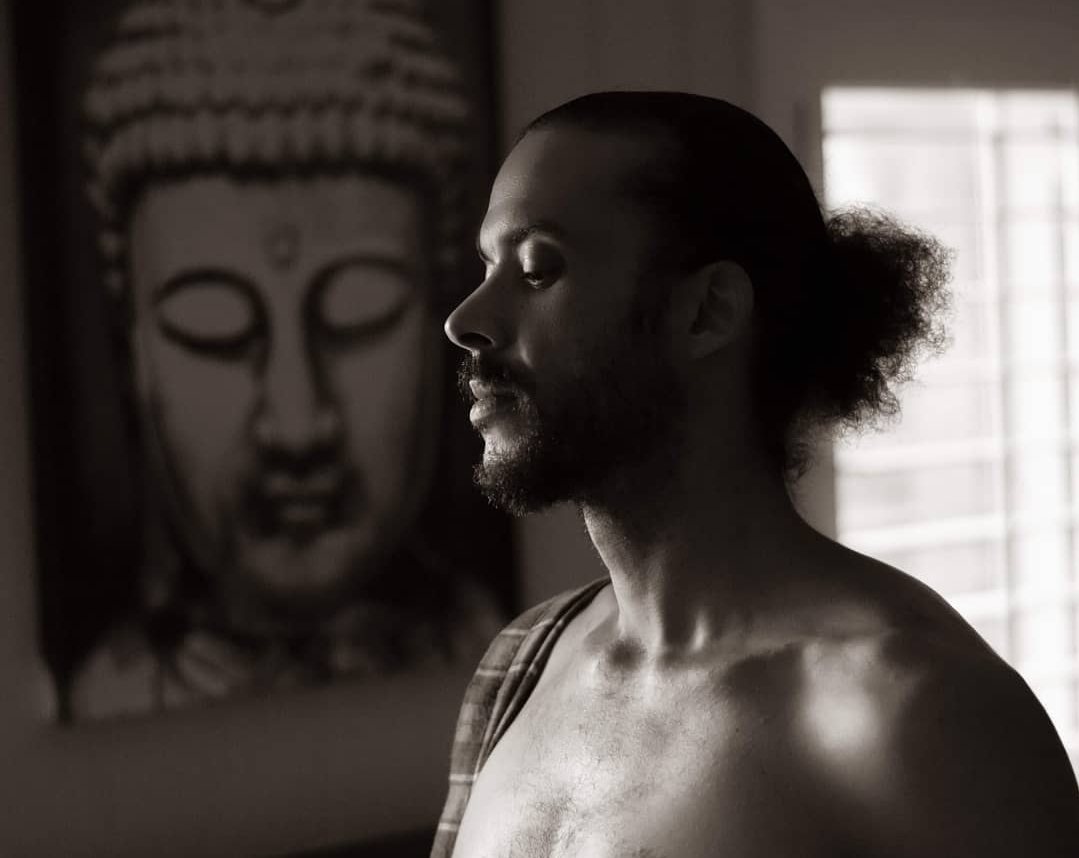
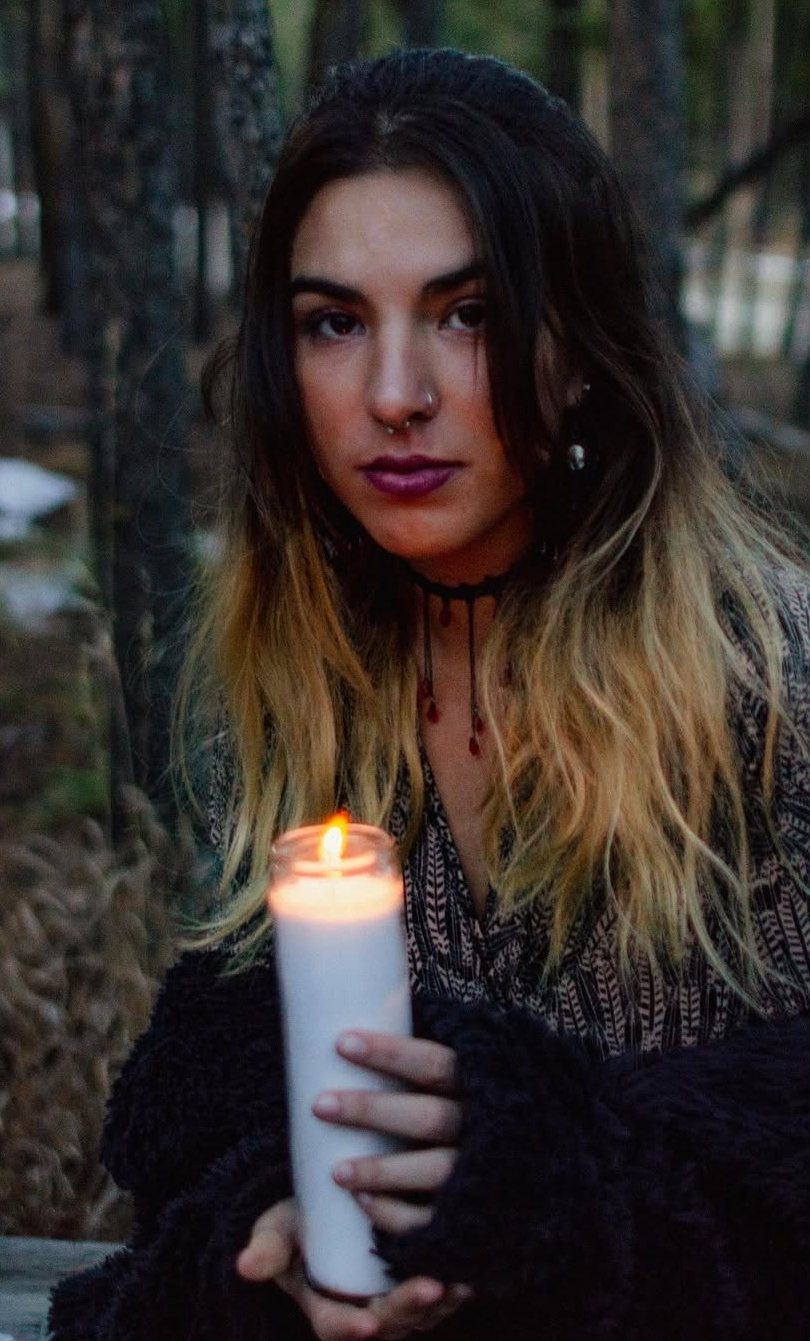
I guide people through a real crossing — in the body, in the story, in ceremony. When the work surfaces what wants to be seen, we build the portrait together.
I have done my own descending. I know what it is to come apart and slowly gather myself back. That is why I can sit with you in the depths without flinching — and why this work is not theoretical. It is lived.
In every rite of passage there is someone whose task is to reflect the crossing back — so you can see what you have done.— What this practice actually is
I do that with a camera.

A Polaroid. What it produced was immediate — an image that developed in your hands, that made the invisible visible in real time. I spent my adolescence with 35mm film cameras and disposables, photographing urban and wilderness landscapes, animals, plants, myself, the people around me — and a great many concerts. Musicians and performers, shot from the crowd. Bodies mid-expression, people entirely inside the thing they were doing. I did not have language for it then, but I was already photographing what it looks like when someone stops performing and simply is.
Photography was never a skill I was building toward. It was a way of seeing I already had.
I am the eldest of three daughters — reading rooms, tracking emotional weather, holding steady while other things moved. And from age ten to twenty I was embedded in a Centers for Spiritual Living community, eventually helping lead and facilitate teen spiritual retreats. I was a teenager learning to hold space for other teenagers moving through real things.
Athletics and academics. Spirituality and embodiment. Community organizing and creative practice. I have always been someone who inhabits multiple dimensions simultaneously — and I have spent most of my life not quite knowing what to call that.
In my early twenties I wanted to be a life coach. I felt underqualified, and I didn’t pursue it. But it was never a passing impulse — it was a calling, and callings do not leave. It waited.
I built a boudoir photography business. I moved, unexpectedly, to Glenwood Springs, Colorado — a place I had no prior relationship with, that became home. My first year here, my body — finally given stillness and space — began unloading what it had been holding for years. I healed through acupuncture, massage, bodywork, and time.
Then I found the Phoenix Path. I did the training. Then I did it again. And I began asking: how do I bring this together with the photography? That question is what Sovereign Splendor is.
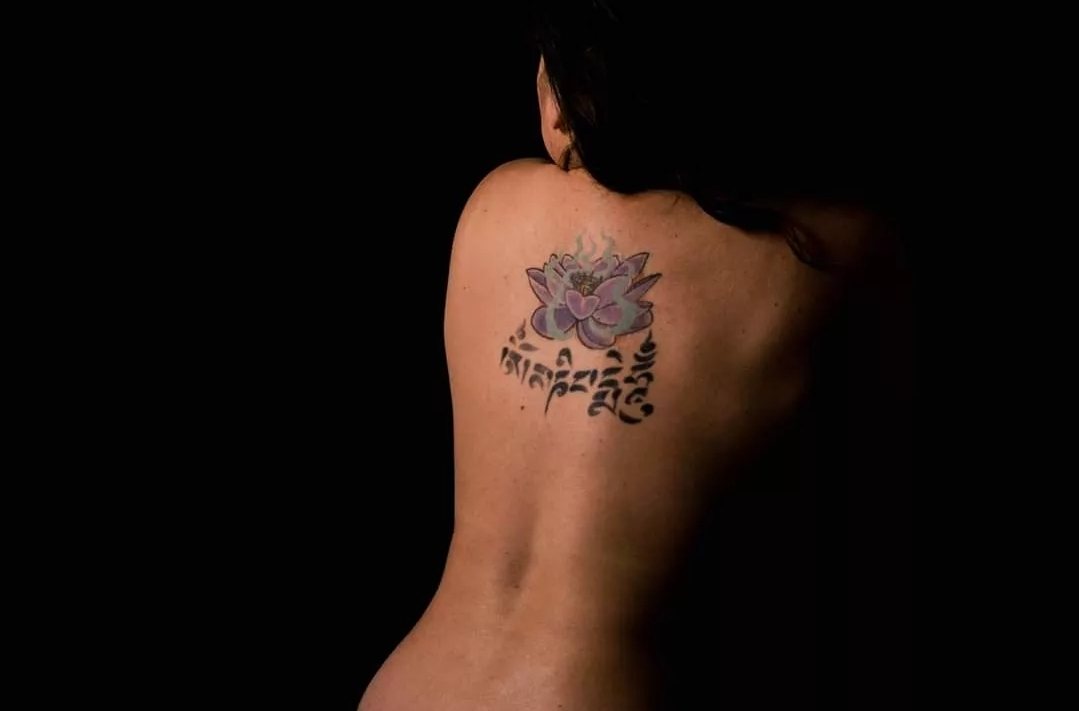
The Phoenix Path Advanced Somatic Facilitator Training — through the Institute of Transformational Arts with Jessica Benstock. 192 hours. I completed it twice. It is an initiation-style training, built deliberately outside the conventional clinical model: live practice, real sessions, no theory without the room.
Somatic trauma resolution · energetic tracking · shadow and parts work · nervous-system regulation · emotional de-repression · developmental psychology and psychological defense systems. What these actually mean →
Also: BA in Anthropology, San Diego State University · Graduate Teacher Training, UC Riverside School of Education · Permaculture Design Certification, Ecoversity (2021) · nearly two decades behind a camera — a decade of it professionally.

Photography, somatic facilitation, anthropology, permaculture, mythology, music, athletics, spirituality, community organizing. These have never been separate chapters. They are simultaneous currents that have always run together underneath everything, and I have stopped apologizing for that. In ecology, the most alive part of any system is the edge — the seam where two worlds meet. I have come to think that is not a failure to specialise. It is where I work.
Sovereign Splendor is that convergence — in process, alive, not finished. I am still learning the full name of what I do.
I have been doing this in one form or another my whole life — in every room where someone needed to be seen and had no one to see them.
Reach out and tell me where you are. There is no wrong place to start — and no pressure to know exactly what you need. That's what the first conversation is for.
You are seen. You are celebrated. You belong here.This work asks for trust. Here is how I hold it.