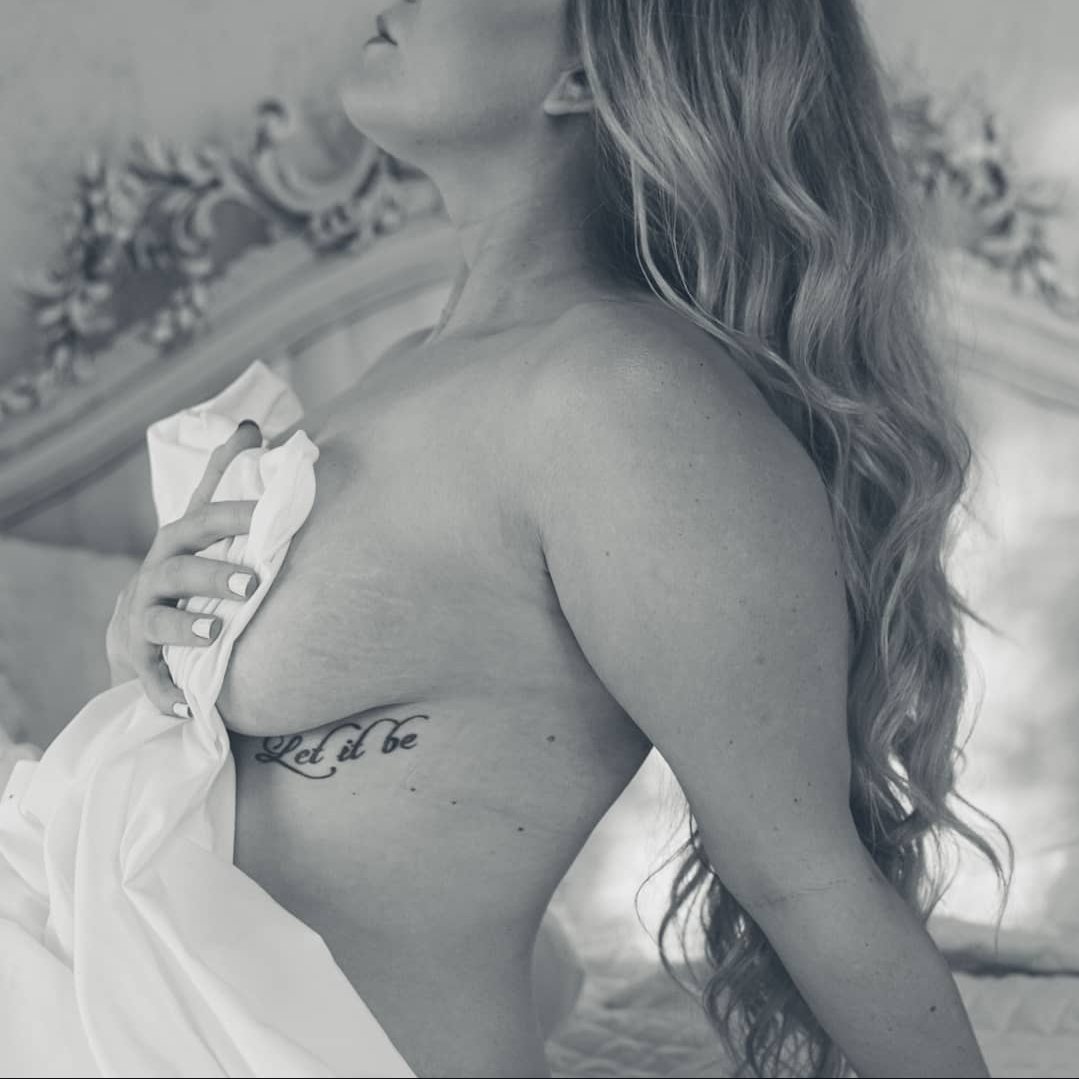
In the space of a single spring and summer, I moved across the country twice — and my body, which had carried me through all of it without complaint, finally stopped and made me feel everything at once.
I had lived in Southern California for thirty-six years. My whole life. And then, in 2020, in two frantic week-long upheavals just a few months apart, I left it — first to Texas that April, then to a Colorado mountain town neither I nor the person I was traveling with had ever set foot in, that August.
The relationship I was in had been ending for a long time — not cleanly, not all at once, but in the slow, ambiguous way some long relationships do. We had kept living together through it, sharing a roof while quietly living more and more separate lives, both of us sensing the road was ending without quite saying so, while the world outside started shutting down.
And here is the part that matters most: those months were not the beginning of the pressure. They were the end of nearly a decade of it.
For years — since the early 2010s — my life had been wave after wave of upheaval. A serious back injury and months of disability. A layoff. A complete career change that meant returning to school in a subject most people find brutal, and then teaching it. Relationship difficulty that, at its worst, became something I had to find my way out of. A broken ankle. Stretches of being bedridden. Financial precarity running underneath all of it.
And through every wave, I rebuilt. I kept choosing to begin again — my body, my work, my sense of myself — in the narrow windows between collapses. The boudoir business I built out of a tiny home studio. The period of real strength and beauty I came into. The social connections, the discipline, the slow returns to myself. None of that was luck. It was made, deliberately, in whatever space each hard season left open. Some of the load was placed on me; much of it I chose, out of love and out of will. Both were always true. I was capable. I was disciplined. I kept producing and growing even when the ground under me was anything but stable.
When the world locked down — and the question of where I could even afford to go became genuinely frightening — a different path opened: a possible reconciliation, a relative's property in Texas, the appearance of safety. So we packed an entire two-bedroom apartment and a storage unit in about a week and drove east.
It didn't hold. The safety we'd imagined in Texas turned out to be built on hopes that weren't real. Within months there was work waiting elsewhere, another week of frantic packing, another drive — this time to Glenwood Springs, Colorado, a place neither of us had ever seen, chosen for its beauty, its wild surroundings, and the quiet hope that it might hold a future for both of us.
I started a permaculture certification the month we arrived. We landed between two wildfires. And then, that next month, the pain started.
The body keeps the appointment, even if you're late
First it was my organs — or that's how it felt; I couldn't say for certain, but the pain seemed to move through several at once, deep and diffuse and impossible to name. I consulted an herbalist. I did a detox protocol. I soaked in the bath. I waited, and I endured. After about a week, it passed.
Then there was a gap. A breath. I thought, perhaps, that was it.
It wasn't. The next month, a different pain arrived — this time in my back and my nerves — and this one did not pass quickly. It settled in and stayed. Four months of chronic, debilitating physical pain. A fatigue so total that managing it became the whole of my days.
I don't know, even now, exactly why my body did what it did when it did. But here is the meaning I eventually found in it — the lens that made the most sense of a thing I couldn't otherwise explain: perhaps the body holds what it cannot process in the moment, and releases that holding only when the churn finally stops long enough for it to feel safe.*
For years — not one, but the better part of a decade — my system had been in survival. Injury. Upheaval. Reinvention. A relationship ending in slow motion inside the same four walls. Two cross-country moves. A sweeping collective disruption that upended the whole world at the same moment mine was already coming apart. Financial fear. The loss of the entire geography of my life. There was never room to feel it, because there was always the next thing to survive. So my body did what bodies do: it filed each experience away, intact and unprocessed, and kept moving.
I can't prove that. But it's the story that fits: my body wasn't waiting for everything to be resolved — nothing was resolved — but for the first gap, the first moment the moving stopped long enough that it could finally set the load down. Glenwood Springs, as hard as that first year was, was the first time in a long time that I was still. Maybe the stillness was the signal. Maybe that's when the body opened the files.
Why this matters for you
I'm telling you this because if you have ever come apart in the first quiet moment after a long hard stretch — not during the worst of it, but right after, when things finally slowed — you may have wondered what was wrong with you.
Why now? Why, when the worst is finally behind me, am I falling apart?
Because now is when there's finally room. Not a malfunction — maybe just a system doing what systems do when the pressure finally lets up.
The exhaustion that arrives after the crisis passes. The grief that surfaces when life finally calms. The illness that comes in the first still season you've had in years. These are not relapses or weakness. They are the body, trusting the pause enough to release what it carried so faithfully while you had no choice but to keep going.
It doesn't even require that everything be okay. It just requires a gap. The first real exhale.
What helped
I healed slowly, and through the body, because that was the only door that opened. Acupuncture. Massage. Bodywork. Detoxification. An enormous amount of time. By that January I had started to come back — no longer consumed by pain management, able to begin turning toward income and relaunching my photography.
Insight didn't heal me. Analysis didn't. The wound wasn't in my mind, so my mind couldn't be where it resolved. My body had carried it, and my body had to be the one to set it down — gently, with support, in its own sequence and on its own clock.
That is part of why I work the way I do now. I didn't learn somatic principles and then go looking for proof. I lived the proof first, involuntarily, in one of the hardest seasons of my life — and only afterward went looking for the training that could explain what had moved through me, and teach me to help other people through that same passage with more grace than I was given.
If your body is unloading something right now, I'll tell you what I wish someone had told me then: nothing has gone wrong. You are not falling apart. You are finally still enough to put it down.
Let it be set down.